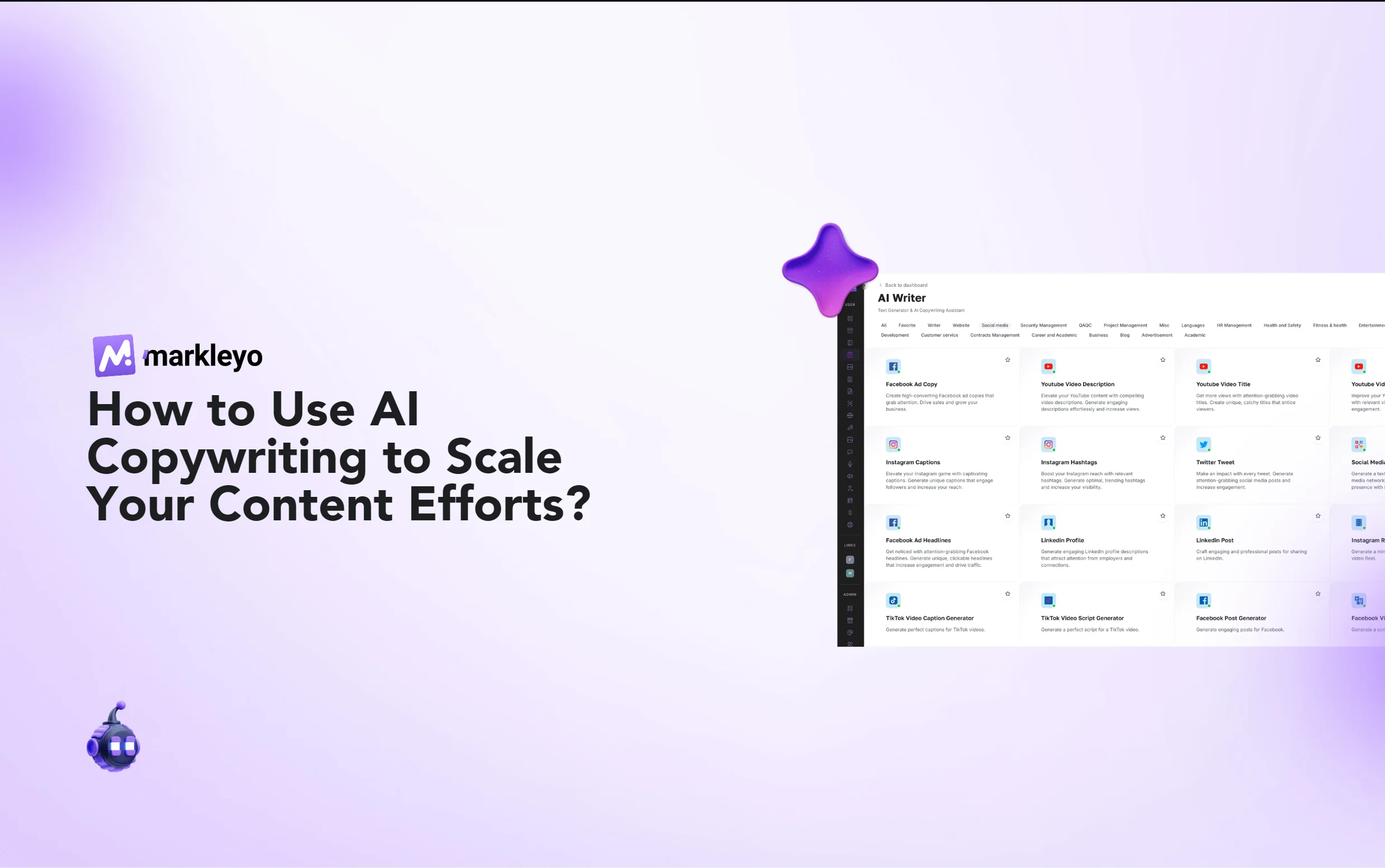
How Can AI Copywriting Boost Social Media, Email & Ads?
AI Copywriting Boost Social Media has transformed the contemporary communication landscape, driven by digital technologies and evolving consumer behaviors. Organizations increasingly rely on digital channels to engage with target audiences, necessitating efficient and impactful content creation across various platforms.
This context underscores the growing relevance of Artificial Intelligence (AI) in automating and optimizing content generation for marketing and communication purposes. Specifically, AI copywriting offers a scalable solution for crafting compelling messages across social media, email campaigns, and paid advertisements.
This article explores the theoretical underpinnings and practical applications of AI copywriting in these domains, examining its capabilities, limitations, and strategic integration into marketing workflows. It considers the advantages derived from AI implementation, identifies potential risks, and outlines best practices for effective utilization, culminating in a discussion of recommended tools for practitioners.
Table of Contents
What Is AI Copywriting and Why It Matters
AI copywriting involves the use of artificial intelligence models, particularly large language models (LLMs), to generate text for marketing and advertising contexts. This technology automates the creation of slogans, product descriptions, ad copy, and other forms of persuasive content. Its significance stems from the increasing demand for personalized and high-volume content, a challenge for traditional human-only workflows.
Digital marketing, which includes social media, email, and paid advertising, has witnessed substantial growth, with digital mediums often outperforming traditional channels in market expansion. This shift requires marketers to produce a continuous stream of engaging copy, a task where AI can provide considerable support.
AI-generated content can ensure consistency in brand voice while adapting messages for diverse platforms and audience segments. The ability to rapidly iterate and test various copy options also contributes to improved campaign performance, aligning with strategic communication goals of influencing public opinion and achieving national interests in an information-based environment.
AI Copywriting for Different Channels
The application of AI copywriting varies considerably depending on the specific communication channel, each possessing unique audience expectations, content formats, and engagement metrics. Strategic communication involves adapting messages to effectively resonate across these diverse environments.
Social Media
Social media platforms are central to modern communication strategies, serving as a primary interface for public engagement and brand interaction. AI copywriting can generate concise and engaging posts tailored to platform-specific constraints, such as character limits on Twitter or image-centric narratives on Instagram.
These tools assist in crafting headlines, calls-to-action, and even full post descriptions that aim to increase user engagement and drive desired behaviors. For instance, AI can produce variations of ad copy to target different user demographics identified through data analytics. Moreover, AI can help maintain a consistent brand voice across numerous social media interactions, which is essential for building and sustaining relationships with customers.
This adaptability of AI-generated content supports the goal of creating content that is beneficial for both the organization and the consumer. Social media can enhance coordination among volunteers and emergency services during crises. It also serves as an effective listening tool to gauge public sentiment and identify emerging risks.
Social media marketing effectiveness can be measured by various factors, including sales, content reach, and audience growth . A study evaluating social media’s role in promoting Sustainable Development Goals found that companies primarily use corporate ability communication strategies rather than Corporate Social Responsibility (CSR) or hybrid approaches.
Email Marketing
Email marketing remains a direct and effective channel for reaching customers, influencing purchasing decisions and building brand loyalty. AI copywriting can personalize subject lines, body content, and calls-to-action at scale, significantly enhancing the relevance and impact of email campaigns .
By analyzing user data and past engagement, AI algorithms can suggest optimal phrasing, tone, and even content structure for different segments of an email list. This allows for hyper-segmentation and dynamic content generation, moving beyond static templates to deliver unique experiences to each recipient.
The ability to generate multiple variations of email copy enables A/B testing, leading to continuous optimization of open rates, click-through rates, and conversion metrics. Research indicates that online digital media advertising channels, including email marketing, positively influence brand sustainability for fast-moving consumer goods and services. Digital marketing, encompassing email, is rapidly gaining ground over traditional advertising.
Paid Ads
Paid advertising, encompassing search engine marketing (SEM), display ads, and social media ads, demands highly targeted and persuasive copy. AI copywriting tools excel in generating numerous ad variations for platforms like Google Ads, Facebook Ads, and other programmatic advertising networks. These tools can optimize copy for specific keywords, audience interests, and campaign objectives, such as lead generation or direct sales.
The rapid generation of diverse ad creatives allows for extensive testing, identifying the most effective messaging quickly and at a lower cost than manual methods. AI can also adapt ad copy in real-time based on performance data, ensuring that campaigns remain optimized and relevant. For instance, AI can generate copy that highlights specific benefits or addresses pain points tailored to different stages of the customer journey.
Studies suggest that multimedia campaigns combining traditional and social media, though not necessarily creating synergy effects, can be perceived as less persuasive, leading to more favorable campaign and brand responses.
The effectiveness of social media as an advertising tool for Small and Medium Enterprises (SMEs) is also evident, offering a strategic approach to sustainability. Digital advertising, characterized by interactivity and personalization, utilizes analytical resources to understand consumer preferences and deliver targeted experiences.
| Channel | AI Applications | Benefits |
| Social Media | Generating captions, headlines, hashtags, post variations | Consistent brand voice, rapid content production, higher engagement |
| Email Marketing | Personalized subject lines, body copy, dynamic content segmentation | Improved open rates, higher click-through, hyper-targeted messaging |
| Paid Ads | Ad copy variations, keyword-optimized messaging, CTA suggestions | Faster A/B testing, optimized conversions, cost-efficient campaign scaling |
| Blogs & Websites | Drafting articles, landing pages, product descriptions | Time-saving, SEO-friendly content, scalable publishing |
| Campaign Analytics | Performance insights feeding back into AI for continuous copy improvement | Data-driven optimization, iterative learning, better ROI |
Workflow: Integrating AI Copywriting
Integrating AI copywriting into an existing marketing workflow involves several stages, transitioning from traditional methods to a hybrid approach that leverages both human creativity and machine efficiency. The process typically begins with defining campaign objectives and target audience profiles, which serve as foundational inputs for AI tools.
Marketers then utilize AI platforms to generate initial drafts or multiple variations of copy based on these inputs. For example, for a social media campaign, an AI could produce five distinct post options targeting different emotional appeals.
Human oversight is critical throughout this process. Expert copywriters review, refine, and edit the AI-generated content to ensure brand consistency, factual accuracy, and creative nuance that AI may not fully capture.
This iterative refinement loop often involves several rounds of human-AI collaboration. Subsequently, the refined copy is deployed across chosen channels. Performance monitoring and A/B testing are then conducted, frequently facilitated by AI-driven analytics, to identify the most effective messages.
The insights gained from these tests feed back into the AI model, allowing for continuous learning and improvement in future content generation. This integrated approach optimizes the creative process, enabling faster content production and enhanced campaign effectiveness.
A significant shift from conventional to digital marketing is observed, with online media, such as Instagram, Facebook, and WhatsApp Business, being pivotal for communication strategies in marketing products.
Advantages of AI Copywriting
The adoption of AI copywriting offers several distinct advantages for marketing and communication professionals. First, it significantly enhances efficiency and scalability in content production. AI tools can generate numerous copy variations in minutes, a task that would take human writers hours or days. This speed is particularly beneficial for high-volume campaigns across multiple platforms and for adapting to rapidly changing market conditions.
Second, AI facilitates personalization at scale. By analyzing vast datasets, AI can tailor messages to specific audience segments, demographics, or even individual users, increasing relevance and engagement. This level of customization is impractical with manual copywriting alone.
Third, AI-driven insights can refine messaging. Through continuous learning from performance data, AI models can identify patterns in effective copy, suggesting improvements that lead to higher conversion rates and better return on investment . Fourth, AI helps maintain brand consistency across diverse communication points by adhering to predefined tone and style guidelines.
Finally, it allows human creatives to focus on higher-level strategic thinking and complex creative tasks, delegating repetitive content generation to AI. Digital and social media are demonstrably more effective than traditional marketing tools. The content generated by companies has a greater influence on brand equity than user-generated content.
Limitations and Risks of AI Copywriting Boost Social Media
Despite its advantages, AI copywriting presents several limitations and potential risks that warrant consideration. A primary concern is the potential for generating generic or uninspired content. While AI can produce grammatically correct and coherent text, it often struggles with true creativity, emotional depth, and nuanced understanding of human culture or humor. This can result in copy that lacks the unique voice or persuasive flair characteristic of skilled human writers.
Secondly, AI models are susceptible to biases present in their training data. If the data contains biased language or stereotypes, the AI may perpetuate these in its generated content, potentially leading to reputational damage or alienating target audiences.
Ethical implications also arise regarding the transparency of AI-generated content, particularly in persuasive contexts like advertising where consumers may not be aware they are interacting with machine-generated text.
Furthermore, AI tools may occasionally produce factually incorrect or misleading information, necessitating rigorous human verification. Over-reliance on AI could also lead to a deskilling of human copywriting expertise over time.
Finally, the integration of AI raises data privacy and security concerns, as the models require access to sensitive customer and campaign data for effective personalization. These factors highlight the need for careful implementation and continuous human oversight to mitigate inherent risks.
Best Practices for Effective Use
Maximizing the benefits of AI copywriting necessitates adhering to established best practices. Firstly, clear and precise input prompts are fundamental. Users must provide AI tools with specific instructions regarding tone, style, target audience, and key message points to generate relevant and high-quality outputs.
Vague inputs typically yield generic results. Secondly, human review and editing remain indispensable. AI-generated drafts should always be treated as starting points, requiring experienced copywriters to refine for brand voice, accuracy, and creative impact. This ensures the content resonates authentically with the audience and aligns with strategic communication objectives.
Thirdly, iterative testing and optimization are crucial. Employing A/B testing for different AI-generated copy variations across social media, email, and ad campaigns provides empirical data to identify the most effective messages. This feedback loop helps to continuously train the AI and improve future outputs.
Fourthly, ethical considerations must guide usage. Organizations should disclose when content is AI-generated if transparency is expected or legally mandated, particularly in sensitive areas like advertising to children. Finally, integrating AI as an assistant rather than a replacement for human creativity fosters a synergistic workflow where efficiency meets originality.
Key best practices include:
- Provide detailed and specific prompts for AI generation.
- Always conduct thorough human review and editing of AI-generated content.
- Implement A/B testing to optimize AI-generated copy.
- Adhere to ethical guidelines regarding AI transparency and data usage.
- View AI as a collaborative tool to augment human creativity.
Recommended AI Copywriting Tools
The market for AI copywriting tools is expanding, with various platforms offering specialized functionalities for different marketing needs. Markleyo AI comes with multiple AI Writer tools specifically programmed and trained to act on your data and brand voice to generate perfect copies. These tools leverage advanced natural language processing (NLP) to generate text for a wide array of applications.
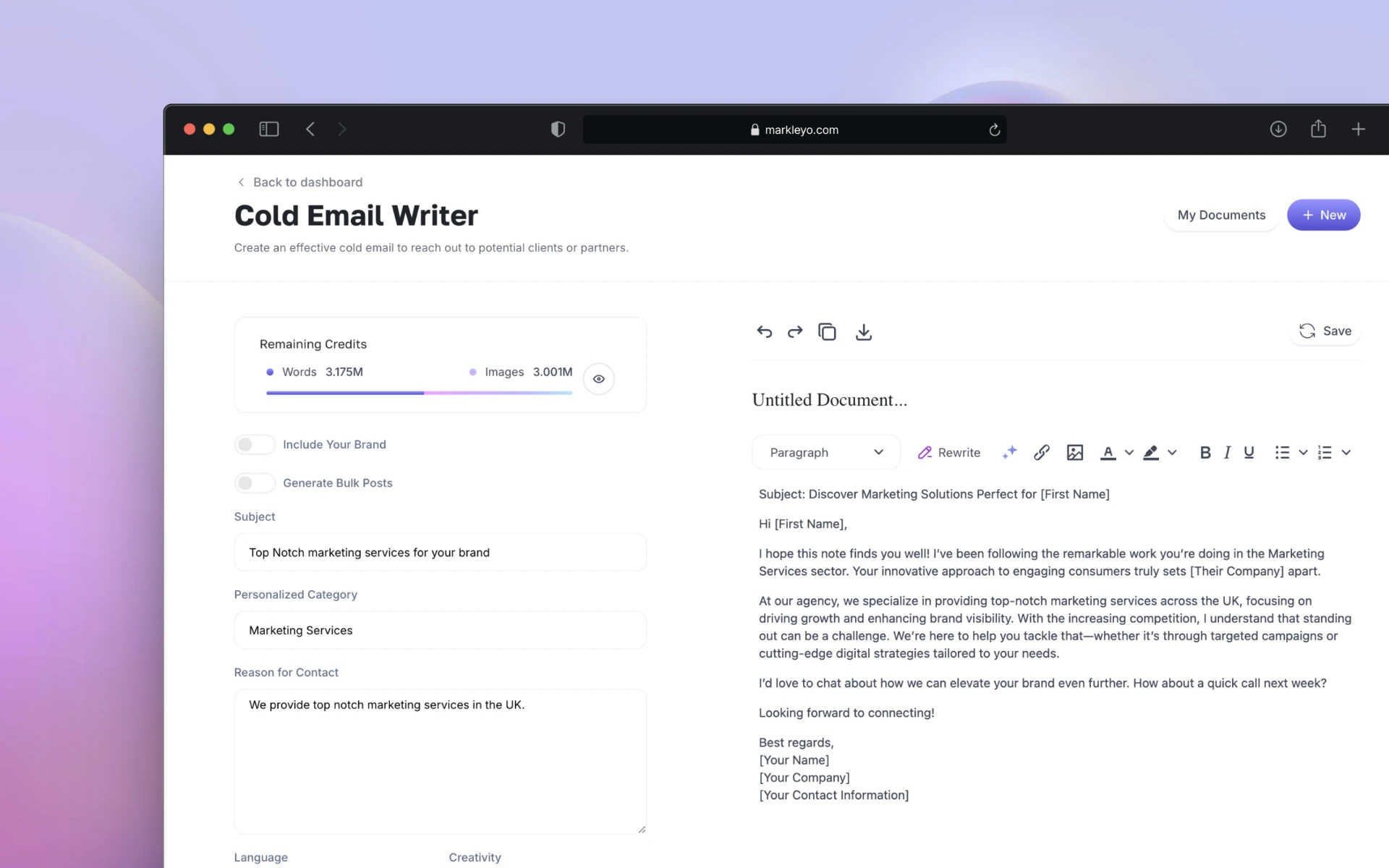
Common categories of AI copywriting tools include:
- General-Purpose Content Generators: These platforms, such as Jasper AI, Copy.ai, or Markleyo AI, offer broad capabilities for creating blog posts, website copy, social media captions, and email content. They often provide templates and frameworks to guide content creation for various marketing objectives.
- Ad Copy Optimizers: Tools like Phrasee or Anyword specialize in generating and optimizing ad copy for platforms like Google Ads and Facebook Ads. They frequently incorporate predictive performance scoring to help marketers select the most effective headlines and descriptions, which can reduce costs and improve conversion rates.
- Email Subject Line Generators: Specific tools focus solely on crafting compelling email subject lines designed to maximize open rates. These often integrate with popular email marketing platforms.
- Social Media Content Creators: Platforms such as Hootsuite’s AI features or Lately leverage AI to repurpose longer content into bite-sized social media posts, complete with relevant hashtags and emojis. This helps maintain a consistent online presence and engagement across channels.
When selecting a tool, factors such as integration capabilities with existing marketing stacks, customization options for brand voice, and the quality of generated output are important considerations. Many tools also offer advanced analytics to track content performance, allowing for data-driven adjustments .
Conclusion
The integration of AI copywriting represents a significant evolution in strategic communication and digital marketing. This technology offers substantial benefits in terms of scalability, personalization, and efficiency across social media, email, and paid advertising channels. AI tools can generate diverse content rapidly, enabling marketers to meet the demands of an always-on digital environment and optimize campaigns with data-driven insights.
However, its implementation requires careful navigation of limitations, including potential for generic outputs, biases, and ethical considerations. Successful deployment depends on strategic human oversight, precise prompt engineering, and continuous performance evaluation to refine AI-generated content.
By adopting a hybrid workflow that combines the creative intelligence of human professionals with the processing power of AI, organizations can produce highly effective and engaging content, ultimately enhancing their communication strategies and achieving their marketing objectives. The judicious use of AI copywriting is poised to redefine content creation workflows, fostering innovation and efficiency in the digital communication sphere.
FAQs About AI Copywriting Boost Social Media
How does AI copywriting improve social media content?
AI can generate captions, headlines, hashtags, and post variations tailored for specific platforms. It ensures brand consistency, saves time, and increases engagement by producing content that resonates with different audience segments.
Can AI copywriting personalize email campaigns?
Yes. AI analyzes user behavior and past interactions to create personalized subject lines, email bodies, and calls-to-action, boosting open rates, click-through rates, and conversions.
How is AI copywriting used in ads?
AI helps generate multiple ad copy variations optimized for platforms like Google Ads or Facebook Ads. It allows faster A/B testing, keyword optimization, and tailored messaging for higher conversion rates.
What are the advantages of using AI copywriting?
AI copywriting saves time, scales content production, maintains brand consistency, enables personalization at scale, and provides data-driven insights to improve performance.