How Brand Experience Automation Boosts Sales?
A buyer scrolls through a product page, adds to cart, hesitates, and closes the tab. Two hours later, a timely message answers the exact question that stalled the decision. The buyer returns, checks out, and leaves a five-star review a week later. That tight loop is no accident. It is brand experience automation working quietly in the background to move revenue forward.
Brand experience automation uses data, orchestration, and design to deliver consistent, personalized interactions across the full journey that shorten sales cycles and grow revenue. It aligns content and timing across channels, removes manual delays, and keeps the brand consistent. The result is higher conversion, larger orders, and better retention at scale.
Table of Contents
Why automation of brand experience drives revenue growth
People do not buy in a straight line. They bounce between social posts, reviews, product pages, and support chats. Manual follow-ups and siloed tools leave gaps that cost sales. When response times slip or brand cues drift, customers notice. Many will switch to a competitor if they do not get timely help on social, which shows why responsive, coordinated systems directly affect revenue.
There is a less visible cost too. Inconsistent experiences erode trust. Over time that shows up as lower repeat purchase rates and weaker word of mouth. The industry has seen how poor experiences can trigger public backlash and reputational damage that is hard to reverse, which underlines the business case for consistent, caring interactions at every touchpoint.
Experience automation for brands fills these gaps. It connects data, creative, and timing so that a brand shows up the same way everywhere, while still speaking to each person’s context. Templates prevent off-brand content. Triggers catch key moments like cart abandonment or post-delivery delight. Decisioning engines pick the next best action in seconds instead of days. That combination is why the automation experience in branding is not a back-office upgrade. It is a sales system hiding in plain sight.
What is brand experience automation?
Definition and scope across the customer journey
Brand experience automation is the coordinated use of customer data, creative standards, and journey logic to deliver on-brand interactions without manual work at every step. It starts long before a lead form and continues well past the first purchase.
- Discovery. Social content and ads follow brand rules while adapting to segment signals like interests and location.
- Evaluation. Emails, site modules, and chat surface relevant proof points and offers with consistent voice and visuals.
- Purchase. Messages remove friction with timely nudges, inventory clarity, and clear policies.
- Use and support. Knowledge content, chatbots, and service replies stay on-brand and responsive.
- Loyalty. Replenishment prompts, upsell bundles, and referral asks arrive at the right moment with recognizable look and tone.
Think of an automated brand experience as a living system that keeps the promise of the brand while adapting to each person’s path.
Brand experience automation vs. marketing automation
These terms get mixed up, yet the focus is different. Marketing automation sends and tracks campaigns across email, social, and ads. It handles outreach, scoring, and reporting. Brand experience automation governs how the brand looks, sounds, and behaves inside those moments, then connects the dots across them. One routes messages. The other protects and personalizes the moments themselves.
Both matter. The difference is practical. Marketing automation asks who and when. Brand automation experience asks what and how it should feel. Use the first to reach people at scale. Use the second to earn trust and make buying easier.
Core benefits for sales acceleration
- Higher conversion rates. Relevant, on-brand content delivered at the right time removes friction and .
- Faster cycle time. Automated next steps keep momentum so deals do not stall between touches.
- Bigger average orders. Dynamic offers match real interest, lifting attach rates in a way manual tactics miss. Editor-verified.
- Lower acquisition cost. Reusable templates and workflows cut production time and waste.
- Stronger retention. Consistency builds trust, and trust keeps customers longer.
How brand experience automation increases conversion across the funnel
Top-of-funnel awareness and engagement
At the top, the job is to be useful and familiar. Automated templates keep every ad, story, and video on-brand, even when dozens of teams are producing assets at high speed. Smart posting schedules and listening tools help teams show up when the audience is actually active, then route questions to the right owner to answer fast.
A simple micro-example. A regional retailer launches a weekend offer. Dynamic templates resize creative for social and email. A posting engine schedules when engagement is highest. Comments about product fit trigger a pre-approved reply sequence with helpful links. People see the same brand, in the same voice, wherever they scroll. Familiar. Reassuring. Clicks follow.
Mid-funnel consideration and conversion
This is where undecided buyers need confidence. Great brands do not shout. They anticipate. Triggers respond to high intent behaviors with specific content. A pricing page visit can prompt a short message with a clear comparison. A cart exit can prompt a reminder and a nudge that answers the last objection instead of spraying .
Journey orchestration connects channels so outreach does not collide. If a chatbot solves a product question, the next email can shift to social proof rather than repeating the script. Decisioning engines use rules and AI to choose the next best message in real time. That keeps the conversation moving toward purchase without feeling pushy.
Post-purchase loyalty, upsell, and referrals
After the sale, expectations are highest. Automated order updates, branded how-to content, and quick support responses do more than reduce tickets. They create the feeling that the brand cares. People remember that feeling. They buy again and tell friends.
- Onboarding. Send a short welcome with one action to take now, not a laundry list.
- Use milestones. Trigger tips based on time and behavior, like day seven care reminders.
- Advocacy. Ask for a review when satisfaction is likely to be highest, then follow with a referral invite. Small touches, big impact.
The pillars of an automated brand experience
Data-driven personalization at scale
Personalization requires good signals. Start with consented data such as on-site behavior, declared preferences, and support history. Segment by need states and timing, not just demographics. Use rules and predictive models to choose content blocks and cadence. Keep the brand’s voice intact even as messages change person to person.
Omnichannel orchestration and timing
People move between channels quickly. That means orchestration needs a single view of the person and a way to pause, advance, or skip steps as context changes. Auto-routing social messages to support or sales. Suppressing email after a reply is received. Posting when the audience is most active. These are simple examples that add up to real results.
Designing the brand automation experience
Templates are not a creative straitjacket. They are guardrails that free teams to move faster without breaking the brand. Dynamic templates apply logos, colors, and voice rules automatically so anyone can create assets that feel right. Governance and approvals happen in the workflow instead of over email. That is how large teams stay aligned while shipping at speed.
Technology stack for experience automation in branding
Customer data platforms and identity resolution
A customer data platform unifies profiles, consent, and events so decisions are made on a single source of truth. Identity resolution connects devices and channels to a person using privacy-safe methods. Without this layer, personalization and frequency control become guesswork. Editor-verified.
Journey orchestration and decisioning engines
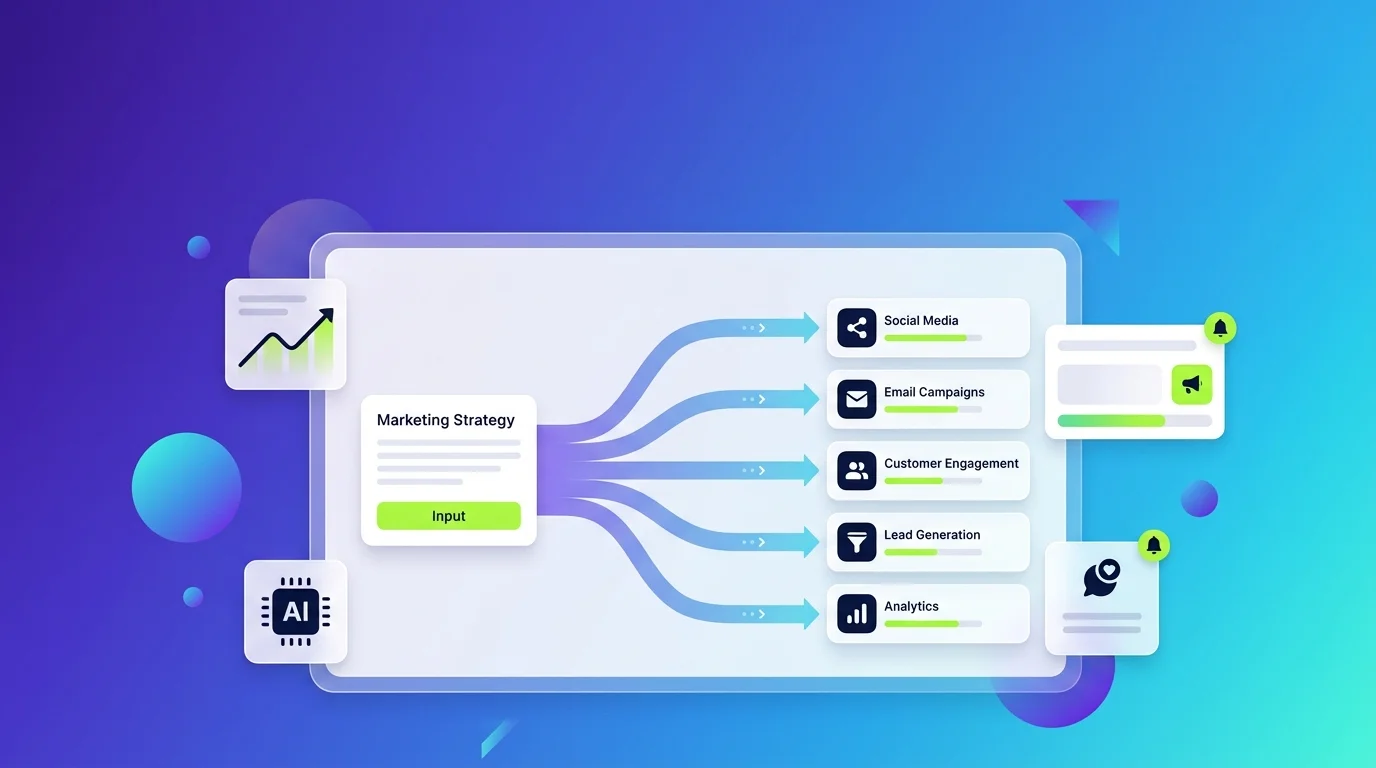
These tools map paths, watch for triggers, and pick the next message. Good systems mix rules for control and AI for speed and scale. They adapt timing and content across email, social, SMS, and site, then feed results back into the model. Teams get to focus on strategy while the engine keeps everything moving.
Experience automation for brands: essential tools
- Social management. Central inbox, scheduling, listening, and analytics help teams respond fast and stay on tone.
- Marketing automation. Email, forms, scoring, and reporting for lead and lifecycle programs.
- Brand asset management and templates. Central libraries and dynamic templates protect consistency while enabling self-serve creation.
- Workflow automation. Connect apps, route requests, and log outcomes without manual handoffs.
Examples mentioned in industry guides include social suites and cross-channel platforms, as well as DAM and template systems that enforced brand rules across assets. The right mix depends on team size and goals.
Implementation roadmap: from pilot to scaled automated brand experience
Readiness assessment and use case prioritization
- Map the journey. Identify the highest-friction moments using data and frontline feedback. People on support lines know where customers get stuck. Use that.
- Set one revenue goal. Pick a metric like checkout conversion or repeat rate for the first quarter.
- Choose two to three use cases. Think abandoned cart, pricing page follow-up, first purchase onboarding. Start small and relevant.
Data, integration, and governance plan
- Data hygiene. Standardize fields, consent, and event names before building anything.
- Integration plan. Connect the CDP, marketing platform, social suite, and DAM so they read and write to shared profiles.
- Brand guardrails. Codify voice, visuals, and do-not-do rules in templates and approvals to prevent drift at speed.
Automation experience in branding: change management essentials
- Training and rehearsals. Give teams playbooks, not just tools. Run dry runs of journeys just like event rehearsals.
- Clear ownership. Define who owns data, creative, journeys, and measurement. Avoid the nobody or everybody trap.
- Feedback loop. Use recap reports and analytics as weekly inputs to refine the program. Small fixes compound.
Measurement and ROI: proving that branding experience automation boosts sales
KPIs, leading indicators, and attribution models
- Leading indicators. Click rate, time to first response on social, product page engagement, template adoption rate.
- Core outcomes. Conversion rate, average order value, repeat purchase rate, churn rate.
- Attribution. Use simple rules to start, then move to multi-touch when data quality improves. Keep model choices documented so decisions are explainable. Editor-verified.
Incrementality and lift measurement
Automation should be judged by what changes, not just what is touched. Use test and control designs. Hold out a small audience from a new trigger. Compare conversion, revenue per visitor, or retention after a fixed period. Rotate controls to avoid bias. Even simple lift tests can separate real impact from background noise. Editor-verified.
Sales velocity, retention, and customer lifetime value
Velocity shows how fast prospects move from first signal to close. Automation usually shortens wait time between steps. Retention shows how long customers stay and how often they return. Consistent aftercare keeps both steady. Over time, these feed lifetime value, which is the clearest proof that the system is creating compounding revenue, not just one-off wins. Editor-verified.
Teams and roles: brand experience manager, experts, and cross-functional ownership
The role of the brand experience manager
This leader connects marketing, CX, and sales around a single experience plan. Responsibilities include journey design, backlog prioritization, approving on-brand templates, and aligning targets with finance. The brand experience manager is the steward of the automated brand experience and the voice of the customer inside the room.
Skills of a brand experience expert
- Data literacy. Comfort with segments, events, and simple models.
- Creative judgment. A sharp eye for voice and visual consistency with the flexibility to adapt by segment.
- Journey thinking. Ability to break goals into triggers, content blocks, and rules.
- Tool fluency. Experience with social suites, marketing platforms, and DAM templates.
- Change leadership. Training, playbooks, and stakeholder alignment.
Operating model across marketing, CX, and sales
- Shared metrics. One scorecard tied to revenue stages, not departmental vanity numbers.
- SLA across channels. Response targets for social, email, chat, and phone to prevent leakage.
- Weekly standup. Review journey performance and backlog. Close the loop on field feedback quickly.
Selecting partners: brand experience companies, platforms, and labs
Evaluation criteria and RFP checklist
- Brand control. Dynamic templates, approvals, and asset governance that protect identity at speed.
- Data fit. Real-time profile access and clean integration with your CRM and CDP
- Orchestration. Visual journey building with rules and AI, including pause and suppression logic
- Analytics. Out-of-the-box reports and the ability to run incrementality tests.
- Security and privacy. Consent management and role-based access. No gray areas.
- Support. Training materials and response times that match your launch plan.
Build vs. buy vs. hybrid approaches
Buy when speed, support, and proven patterns matter most. Build when a proprietary flow is a competitive edge. Hybrid works well for many teams. Use best-in-class tools for orchestration and social, then build a light layer for business logic that is unique to your model. Keep the number of custom parts small so maintenance does not consume the gains.
Running a proof of concept with a brand experience lab
A brand experience lab is a focused environment to test journeys, assets, and rules with real data before full rollout. Set a tight scope like one product line and two triggers. Use dynamic templates from your DAM or partner platform. Measure lift against a control and capture qualitative feedback from support and sales. Partners that specialize in branding experience automation often provide lab-like services to speed this phase.
Careers in brand experience automation: jobs, titles, and career paths
In-demand brand experience jobs and titles
- Brand experience manager.
- Journey orchestration manager.
- Marketing automation architect.
- Brand systems designer for templates and guidelines.
- Lifecycle marketing lead.
- Social customer care lead.
Search queries for brand experience jobs often bundle skills in data, content, and operations, which shows how cross-functional this work has become. Demand is rising as more CMOs prioritize automated branding systems at scale.
Certifications, portfolios, and tooling experience
- Platform certifications. Marketing automation and social management credentials help signal readiness.
- Portfolio. Show a before and after for a journey, the guardrails you set, and the measured lift.
- Process artifacts. Include playbooks, templates, and training that made the change stick.
Career growth, salary ranges, and hiring trends
Career paths often start in lifecycle or social operations and grow into journey leadership or brand systems roles. Hiring momentum tracks with the move to automate brand workflows and protect consistency while teams scale output, a priority many leaders now call out in planning cycles. Compensation varies by market and scope. Editor-verified.
Conclusion
Automation of brand experience is not about replacing human touch. It is about removing lag, protecting identity, and meeting people where they are with helpful, consistent interactions. Done well, branding experience automation raises conversion, speeds cycles, and lifts lifetime value by turning scattered touchpoints into a coherent, trustworthy system.
Recommended first experiments to run this quarter
- Abandoned cart sequence that answers the top three objections without blanket discounting.
- Pricing or demo page follow-up with one proof point matched to segment.
- Onboarding starter email and social response playbook focused on one action to take now.
- Template rollout for social and email with approvals inside the workflow.
Next steps to scale brand experience automation
- Stand up a light CDP profile, unify consent, and connect social and email.
- Codify voice and visuals in dynamic templates and stop one-off asset creation.
- Build a shared scorecard for marketing, CX, and sales. Review weekly and iterate fast.
- Run a proof with a brand experience lab, then expand to more journeys once lift is proven.
The lift does not come from one flashy tactic. It comes from a system that shows up the same way, learns quickly, and keeps promises. Start with one journey, measure the impact, and scale the automated brand experience step by step.
Final note. Brand experience automation thrives when teams align on the customer moments that matter. Get those right and sales will follow. Simple as that.
FAQ: Brand Experience Automation
What is the 3 7 27 rule of branding?
It is a practical guideline used by brand teams. You have about three seconds to signal who you are, seven seconds to earn attention, and twenty seven seconds to land a clear message. It is a reminder to design assets and scripts that work fast in real contexts. Editor-verified.
What are the 4 dimensions of brand experience?
Many teams apply four dimensions. Sensory, affective, intellectual, and behavioral. In simple terms, what people see and hear, how they feel, what they think, and what they do next. These dimensions guide creative and interaction design. Editor-verified.
What are the 4ps of brand experience?
A practical version used in experience planning. Promise, proof, personality, and performance. Define the promise, show proof, express a consistent personality, and deliver performance during and after purchase. Editor-verified.
What are the 5 dimensions of brand experience?
Teams sometimes add a fifth dimension. Social or relational. That covers community, advocacy, and how people talk about the brand with others. It is useful when referral and word of mouth matter. Editor-verified.
What are the 5 dimensions of brand experience?
Teams sometimes add a fifth dimension. Social or relational. That covers community, advocacy, and how people talk about the brand with others. It is useful when referral and word of mouth matter. Editor-verified.