What is the Future of AI Messaging Bots in Marketing?
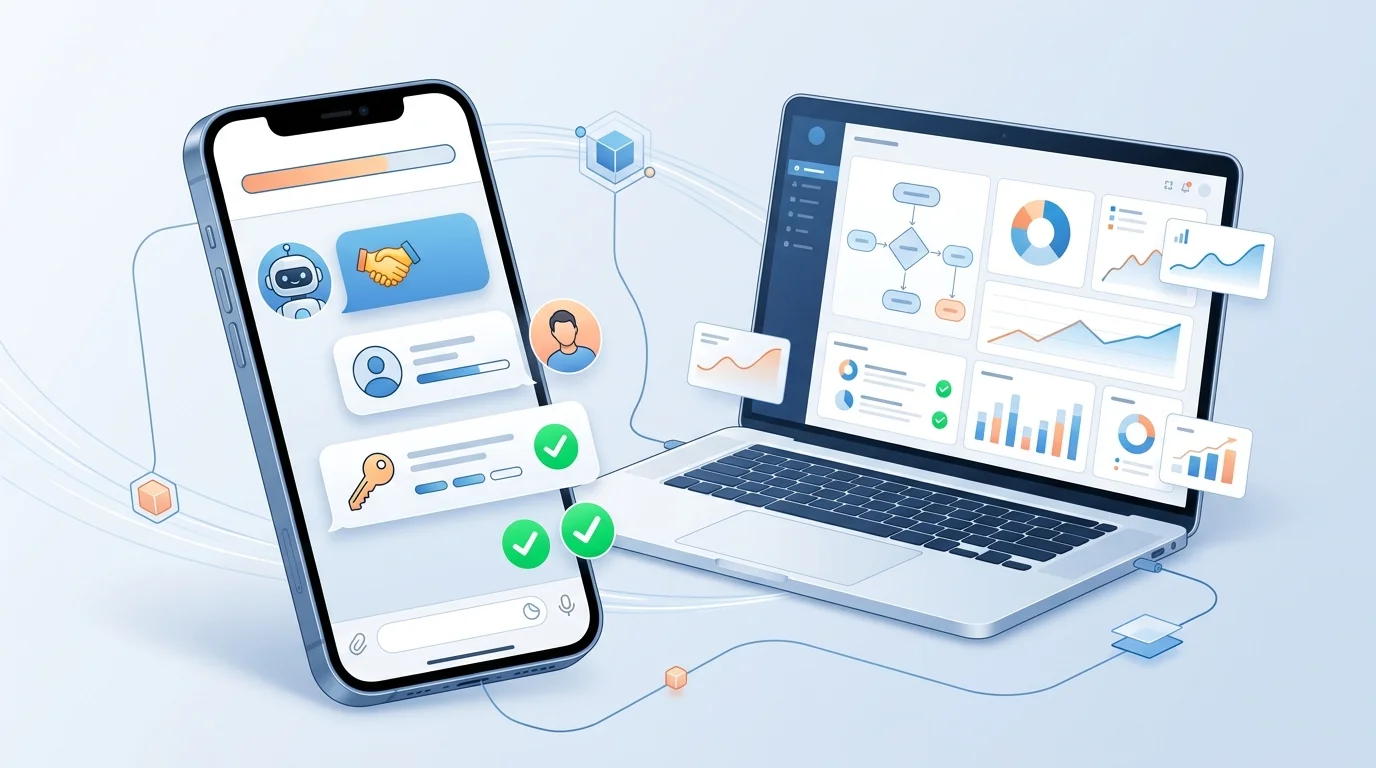
AI Messaging Bots in Marketing are undergoing substantial evolution, fundamentally reshaping customer engagement strategies across various industries. These automated conversational agents, leveraging advancements in natural language processing (NLP) and machine learning, extend beyond rudimentary query resolution to offer sophisticated, context-aware interactions. Their integration into marketing frameworks promises enhanced efficiency, scalability, and personalized customer experiences.
This analysis examines the prospective developments and applications of AI messaging bots within the marketing sector, considering their expanding capabilities from hyper-personalization to autonomous sales functions and hybrid support models.
Table of Contents
Hyper-Personalized Customer Journeys
The capacity of AI messaging bots to deliver hyper-personalized customer journeys represents a significant advancement. By analyzing vast datasets, including past interactions, purchase history, and behavioral patterns, these bots construct highly individualized communication paths.
This enables dynamic adjustments to messaging content, offers, and timing, catering precisely to each user’s preferences and stage in the customer lifecycle. Personalized communication, tailored to specific user needs, can significantly influence user behavior.
Such bespoke engagement fosters stronger brand loyalty and improves conversion rates, moving beyond generic interactions to create meaningful connections with consumers.
Omnichannel AI Messaging Integrations
Future AI messaging bots will operate seamlessly across diverse communication channels, providing a unified and consistent brand experience. This omnichannel integration ensures that a customer’s interaction history and context are maintained whether they engage via website chat, social media, email, or mobile applications.
The consistent application of these bots across platforms facilitates a coherent customer journey, removing friction points often associated with channel switching. Effective integration with real-time chat systems further streamlines communications, offering a faster interaction experience compared to traditional methods.
This cohesive strategy supports comprehensive customer relationship management and prevents disjointed experiences.
Voice-Enabled Chatbots & Conversational AI
The progression towards voice-enabled chatbots and advanced conversational AI marks a pivotal shift in human-computer interaction. These systems utilize sophisticated NLP to comprehend spoken language, allowing for more natural and intuitive exchanges.
Conversational AI enables bots to engage in complex dialogues, understand nuances, and provide relevant information or assistance without requiring text input. This technology extends accessibility and convenience, making interactions faster and more user-friendly, particularly for complex inquiries or hands-free environments.
The development of robust natural language processing is essential for these systems to effectively understand and respond to user input.
AI Bots with Advanced Predictive Analytics
Integrating advanced predictive analytics will empower AI messaging bots to anticipate customer needs and preferences proactively. By analyzing historical data and identifying trends, these bots can foresee potential issues or opportunities, initiating relevant conversations before explicit customer requests arise.
This proactive engagement includes personalized product recommendations, timely support interventions, and targeted promotional offers based on anticipated behavior. Predictive models can estimate missing values or correct inaccurate readings, which translates to anticipating situations for decision-making. Such foresight enhances customer satisfaction and optimizes marketing efforts by delivering value at the opportune moment.
Autonomous Sales Bots
Autonomous sales bots represent a significant leap, capable of managing entire sales processes from initial lead qualification to transaction completion. These bots can engage prospects, answer product inquiries, negotiate terms, and process payments without direct human intervention. Equipped with comprehensive product knowledge and sales acumen, they provide 24/7 sales support, expanding market reach and accelerating the sales cycle.
Their ability to automate key sales functions allows human sales teams to focus on more complex, strategic engagements. This automation not only improves efficiency but also ensures consistent application of sales protocols.
AI + Human Hybrid Support
The most effective future models will likely involve a hybrid approach, combining the scalability and efficiency of AI bots with the nuanced problem-solving and empathy of human agents—an evolution often referred to as Human and AI Sale, where both work collaboratively to optimize the customer journey.
AI bots can handle routine queries, gather preliminary information, and qualify leads, seamlessly escalating complex or sensitive interactions to human representatives. This collaborative model ensures that customers receive prompt, automated assistance for common issues while retaining access to human expertise for intricate problems.
Such systems enhance overall service quality, reducing response times and optimizing human agent workload. The following table summarizes key bot types and their applications:
| Bot Type | Primary Function | Marketing Application |
| Informational Bots | Provide FAQs, product details. | Basic customer support, lead nurturing. |
| Transactional Bots | Facilitate purchases, bookings. | Direct sales, order processing. |
| Personalization Bots | Tailor content and offers. | Hyper-personalized recommendations, dynamic content delivery. |
| Hybrid Bots | Combine AI with human oversight. | Complex query resolution, high-value customer interactions. |
Emotion Detection & Sentiment-Driven Messaging
The integration of emotion detection and sentiment analysis into AI messaging bots represents a critical advancement for nuanced customer interactions.
Sentiment analysis focuses on extracting sentiment-related information from text, moving beyond simple positive/negative classifications to assess the strength of emotion . This capability enables bots to gauge customer mood and adapt their communication accordingly.
Identifying Customer Sentiment in Real Time
Bots increasingly leverage NLP to identify customer sentiment from text inputs in real time. This involves analyzing word choice, phrasing, and even punctuation to infer emotional states such as satisfaction, frustration, or urgency.
Algorithms like Naive Bayes classifiers are applied to detect sentiment in textual data. Accurate sentiment detection allows for immediate, contextually appropriate responses, preventing negative experiences from escalating.
Adaptive Tone and Response
With real-time sentiment identification, AI bots can adapt their conversational tone and response strategies. For a frustrated customer, a bot might adopt a more empathetic and problem-solving approach, offering direct solutions or immediate human escalation.
Conversely, positive sentiment can trigger engaging, appreciative responses. This adaptive communication cultivates more positive customer perceptions and strengthens emotional connections with the brand.
Reducing Churn with AI Emotion Detection
Proactive intervention based on identified negative sentiment can significantly reduce customer churn. When bots detect dissatisfaction or confusion, they can trigger specific workflows, such as offering discounts, providing additional support resources, or flagging the interaction for human review.
This preemptive engagement addresses issues before they result in customer attrition, demonstrating a commitment to customer satisfaction. Monitoring and analyzing sentiment, particularly negative expressions, contributes to understanding user behavior and potential dissatisfaction.
Integration with CRM & Marketing Automation Tools
The efficacy of AI messaging bots is significantly amplified through deep integration with Customer Relationship Management (CRM) and marketing automation platforms. This integration ensures a seamless flow of customer data, enabling bots to access comprehensive customer profiles and update records with interaction details. Such data synchronization facilitates highly personalized marketing campaigns and ensures that human agents have full context when intervening.
For example, the correlation between user-generated content features and user responses is crucial for assessing profile credibility, which can inform CRM strategies. This interoperability maximizes the utility of customer data, creating a unified view of each customer across all touchpoints.
Markleyo enhance this integration by providing AI-driven automation tools that streamline data flow, messaging workflows, and CRM-based personalization.
AI-Powered Content Generation Inside Chatbots
AI-powered content generation within messaging bots represents a transformative capability for marketing. Bots can dynamically generate personalized messages, product descriptions, FAQs, and even creative copy in real time, tailored to the specific context of a conversation. This eliminates the need for predefined scripts for every scenario, allowing for more fluid and relevant interactions.
The ability to generate contextually appropriate content enhances the bot’s utility, providing immediate and precise information to customers. This advancement reduces manual content creation efforts and ensures consistent brand messaging, scaled across numerous customer interactions.
- Dynamic Messaging: Bots create unique responses based on conversation flow.
- Personalized Product Descriptions: Content adapts to user preferences and browsing history.
- Automated FAQ Updates: Bots generate and update answers based on common queries.
- Campaign Copywriting: Bots assist in drafting promotional texts for targeted audiences.
Conclusion
The future of AI messaging bots in marketing is characterized by increasing sophistication and integration. From hyper-personalized customer journeys and omnichannel presence to voice-enabled interactions and predictive capabilities, these technologies are redefining how brands connect with their audience.
The emergence of autonomous sales bots and hybrid human-AI support models underscores a shift towards more efficient, scalable, and empathetic customer engagement. Emotion detection and sentiment-driven messaging will further refine interactions, allowing for adaptive communication strategies.
Through robust integration with CRM and marketing automation, coupled with AI-powered content generation, messaging bots will serve as central components of comprehensive marketing ecosystems. These developments promise to elevate customer experiences and optimize marketing effectiveness.
FAQs About AI Messaging Bots in Marketing
What are AI messaging bots in marketing?
AI messaging bots in marketing are automated systems that use NLP and machine learning to engage customers through chat. They handle support, sales, recommendations, and personalized interactions.
How will AI messaging bots improve customer engagement?
They offer hyper-personalized conversations, real-time recommendations, sentiment-driven responses, and omnichannel continuity, resulting in more meaningful interactions.
Are AI bots going to replace human agents?
Not entirely. The future is hybrid—AI handles routine tasks, while humans manage complex, high-empathy conversations.
How does sentiment analysis help marketing bots?
Sentiment analysis helps bots understand customer emotions, adapt tone, prevent churn, and deliver context-sensitive messaging.