How to Design Conversational Flows in Marketing Bots?
Whether you’re running a startup or an established enterprise, getting your marketing bot to communicate naturally is a major game-changer. Imagine it instantly answering routine questions, guiding potential clients to relevant products, and following up with leads—just like a helpful teammate. And with a reliable WhatsApp automation tool in place, you can streamline your conversations even more. Below, you’ll learn how to design effective conversational flows for marketing bots on WhatsApp and Telegram so that you can keep customers engaged while freeing up your own time.
Table of Contents
Explore marketing bot basics
Before diving into conversation design, let’s get crystal clear on what a marketing bot actually does. A marketing bot automates interactions in popular chat apps (like WhatsApp or Telegram) to handle common questions, deliver promotional messages, and even process basic transactions. Essentially, it’s your personal virtual assistant that greets people and addresses their needs without manual oversight.
Here are a few key advantages you gain by properly setting up your bot:
- 24/7 availability for customers, no extra staff needed.
- Faster lead capture and follow-up.
- Consistent brand presence in everyday chat channels.
- Scalable communication that grows with your business.
Think of your bot as a well-trained store clerk who’s there to help day or night. You set up the rules, responses, and tasks, then let it do its thing—like handing out flyers automatically, but without being pushy. Once you’ve nailed the basics, you can move on to planning how your bot should behave in each conversation.
Plan your conversational flow
Designing a marketing bot’s conversations starts with setting clear objectives. What exactly do you want the bot to achieve? Maybe it’s capturing email addresses, upselling products, or resolving support queries. Each goal helps shape the direction of your conversation flow.
Consider these questions right from the start:
- What are the most frequent things customers ask when they contact you?
- How do you want customers to feel after chatting with your bot (e.g., informed, reassured, intrigued)?
- Which user actions—like clicking an external link or sharing personal details—will be part of the conversation?
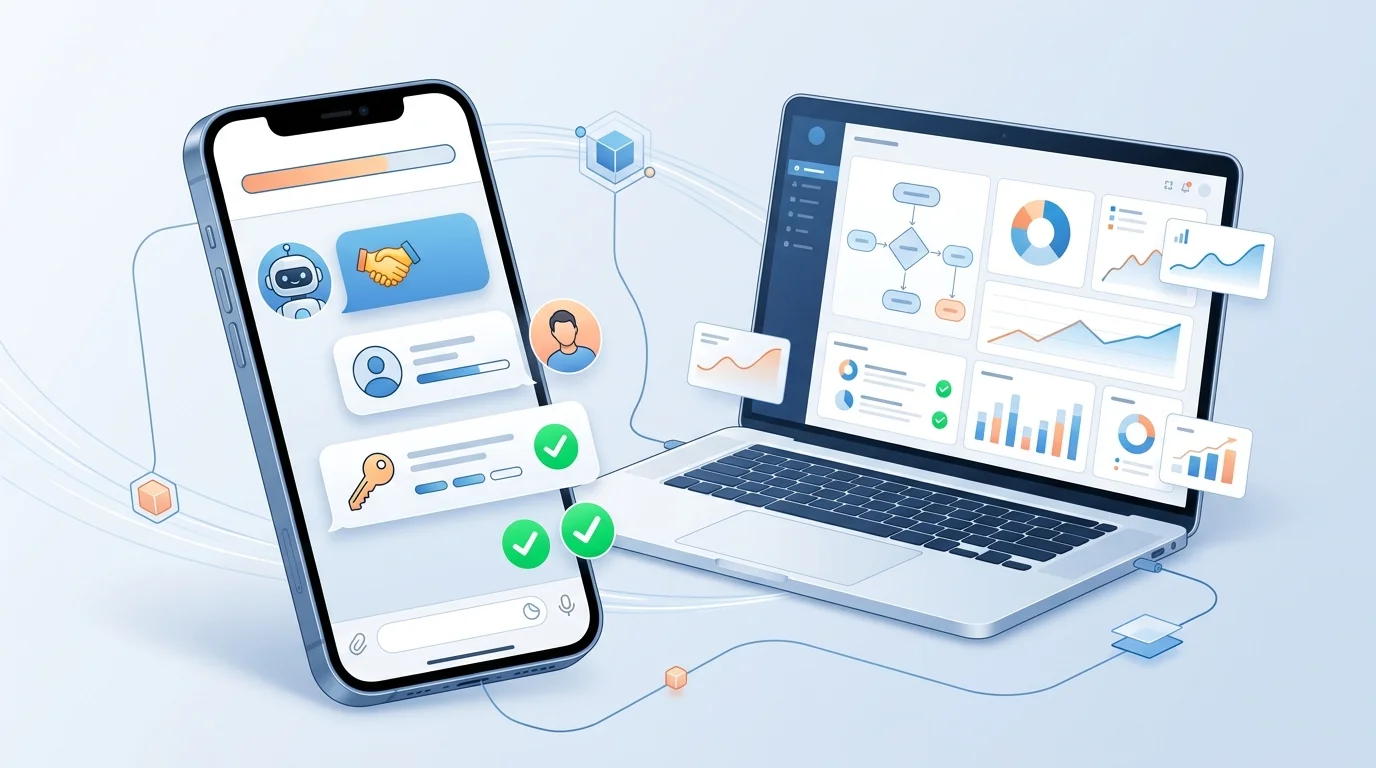
When you have solid answers, build simple flowcharts or outlines to see how the bot might progress. Each objective should translate into a conversation branch so that the bot’s messages guide people toward a smooth next step.
Map frequent user paths
No matter how diverse your audience is, you can usually group people’s needs into a few main categories—like product inquiry, account support, or general FAQs. By mapping out common user journeys, you figure out which bot responses to prioritize.
Imagine a user’s perspective:
- They open WhatsApp or Telegram.
- They type “Hi, I need help ordering Product X.”
- Your bot greets them, identifies which product (or type of product) they’re referring to, and offers help.
If your user says “I need pricing info,” your bot might share the relevant price list or discount. If they say “I want to upgrade my plan,” your bot can run them through the steps to do so.
It helps to keep track of these user paths in a table. For instance:
| User Query | Possible Next Step | Bot Action |
| Product info request | Show product or plan options | Provide short descriptions and direct links |
| Price or discount inquiry | Share cost breakdown and current promotions | Prompt them to sign up or learn more |
| Order status check | Ask for order ID or user details | Fetch status from your system or provide timeline |
| General support request | Provide troubleshooting options | Link to your FAQ page or connect to human agent |
This table guides your bot-building process so you can set up each conversation branch confidently. And as you expand your offerings, you simply update or add new lines.
Structure clear message branches
Once you know your common user paths, you can write the actual bot messages. Each part of the conversation should feel friendly, helpful, and easy to follow. For example, if you’re creating a greeting, keep it short (“Hey there, welcome to our store! How can I help you today?”). Then, present a few options that match your user’s probable next moves:
- “1. Get product details”
- “2. Check pricing or discounts”
- “3. Ask a support question”
By providing numbered or bullet-pointed choices, you make it simple for users (and cut down on confusion for your bot). The user can respond with a number, or they can type out a request. Even better, keep language casual—like chatting with a helpful shop assistant. Avoid loading your text with complicated jargon. If a technical term is necessary, define it immediately in parentheses.
Tips for smooth wording
- Use contractions: “Let’s get started!”
- Keep sentences short and to the point: “Need to check your order? Type ‘Order status’.”
- Check for splits in logic: If the user replies with an unrelated question, be sure your bot either provides a default fallback or routes them to a human agent.
Example branch snippet
- Bot: “Need help choosing the right plan? Type ‘Plan info’ or ‘Talk to sales.’”
- User: “Plan info”
- Bot: “Here are our plan tiers: Basic, Plus, and Pro. Which do you want details on?”
By focusing on clarity, you reduce misunderstandings. You’re also making the bot’s job easier, because each user response triggers a known path.
Test and refine logic
It’s tempting to set your marketing bot live as soon as the basic scripts are done, but testing is crucial. A small test group—maybe a few team members or loyal customers—can help you spot clunky wording or dead ends (moments when the bot gets stuck or doesn’t know how to proceed).
Try these steps for effective testing:
- Run through all possible user questions and see if the bot responds correctly.
- Use “wrong answers” or random words to see if the bot’s fallback system activates.
- Time how many steps it takes to reach a core goal (like learning about a discount). If it’s too many, shorten the conversation.
Refine your script based on feedback. That might mean rearranging certain branches or adding clarifications. Keep in mind that user behavior can change over time, so plan on reviewing your conversation flows at regular intervals—quarterly, semi-annually, or whenever you roll out new features.
Add personalization touches
While it’s great to automate tasks, you can still keep a human vibe. Personal touches can be as simple as greeting users by name (for instance, “Hey Sarah, great to see you!”) or referencing past interactions (“Welcome back! Need help finishing your last order?”).
Here are a few personalization tricks:
- Use polite but natural language: “Hope your day’s going well! Want to track your recent purchase?”
- Acknowledge location or time of day if relevant (“Good morning! Up early to look for new deals?”).
- Mention any known preferences from past chats (“I remember you asked about our Pro plan. Here’s a quick update!”).
With these small details, your bot feels like a friendly helper who recognizes returning customers. Look for ways to gather customer data ethically—like letting them opt in to sharing a first name—so you can continually improve the personalization layer.
Optimize for WhatsApp automation tool
You might already know how powerful a WhatsApp automation tool can be for scaling your bot’s performance. By integrating your conversation flow into a robust platform, you ensure consistent user experiences and real-time response accuracy. Here’s how to get the most from these tools:
- Set up template messages for quick replies (like order confirmations or follow-up notifications).
- Integrate your CRM so you can pull relevant user data (e.g., name, last purchase) on the fly.
- Automate triggers based on keywords. If someone types “discount,” the bot instantly offers current promo codes.
Keep an eye on official WhatsApp guidelines to ensure your messages comply with their policies. And if you’re also using Telegram, replicate a similar structure so your brand interaction feels seamless across multiple channels.
Encourage user feedback loops
One of the best ways to keep refining your bot is by listening to what users say and do. Are they abandoning chats midway? Are certain branches rarely used? Gathering direct feedback is also super helpful—for example, a quick question like, “Was this info useful?” with a thumbs-up or thumbs-down reply.
To collect feedback:
- Include a poll at the end of the interaction (“How would you rate this chat?”).
- Encourage free-text feedback if customers want to share specifics.
- Look at conversation analytics (like open rates and response rates) to see which parts of your flow might need revisions.
As you get more input, keep refining. Bot-building is never truly finished, because your customers and your offerings evolve.
Wrap up your strategy
Designing conversational flows for marketing bots is both art and science. You’re balancing structured decision trees with a style that feels casual, personal, and direct. From mapping user journeys to testing your scripts, every step aims to create a conversation that’s more than just transactional—it’s genuinely helpful.
You have all the building blocks now:
- Define your key objectives and user needs.
- Map frequent paths in a table or flowchart.
- Write concise, welcoming messages that match each stage.
- Test your logic in multiple scenarios before going live.
- Personalize the experience whenever possible.
- Leverage a dependable WhatsApp automation tool for reliability and speed.
It might feel like a lot at first, but once your bot is up and running, it can lighten your workload and delight your audience. As you manage your day-to-day tasks, your bot is there, answering queries and routing leads to the right place.
Feel free to tweak and expand your conversational flows as your business grows. If you think of your bot as an ever-improving team member, you’ll see its potential to boost engagement, nurture leads, and ultimately help customers feel supported around the clock. Give these tips a try, and watch how your marketing bot transforms your customer interactions one message at a time.
FAQs About Design Conversational Flows in Marketing Bots
What does it mean to design conversational flows in marketing bots?
Designing conversational flows in marketing bots means mapping out how a bot interacts with users—structuring dialogues, responses, and actions to ensure smooth, natural, and goal-driven communication.
Why are conversational flows important for marketing bots?
Conversational flows help bots guide users efficiently through product inquiries, purchases, or support requests. Well-structured flows reduce confusion, improve engagement, and enhance customer satisfaction.
How can I start designing conversational flows for my bot?
Begin by identifying your bot’s main objectives—like lead capture or customer support. Then, outline user paths, draft message scripts, and test each flow to ensure logical progression and clarity.
What are the key elements of an effective conversational flow?
An effective flow includes clear objectives, simple message branches, fallback responses, personalized touches, and seamless transitions between topics or channels.