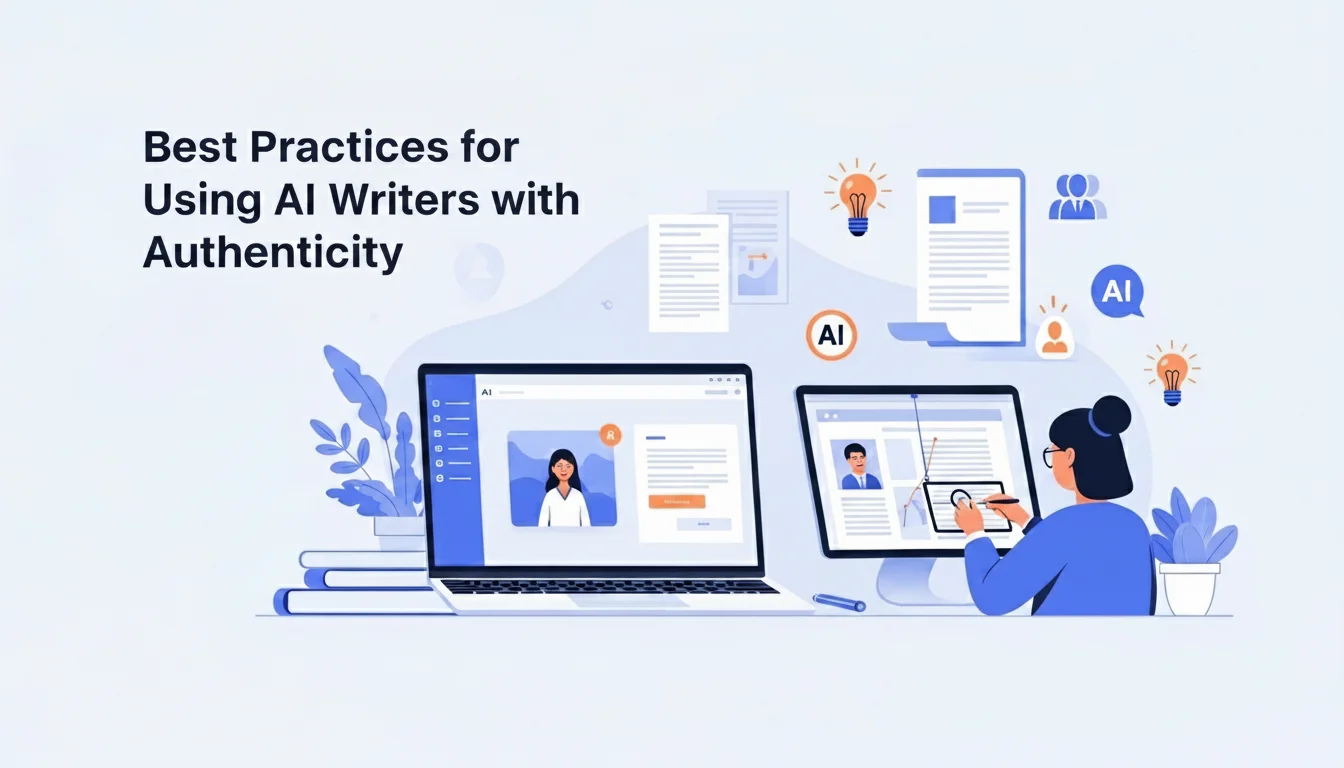
Best Practices for Using AI Writers with Authenticity
In today’s fast-paced digital world, Best Practices for Using AI Writers have become essential for businesses and content creators aiming to streamline their writing processes. While these tools can significantly enhance productivity, maintaining authenticity remains paramount. The best practices for using AI writers without losing authenticity focus on striking a balance between leveraging technology and preserving the unique voice that resonates with your audience. By adopting a thoughtful approach, you can create engaging content that informs, connects, and stays true to your brand’s identity.
Recent statistics reveal that 83% of marketers are utilizing AI to create content, indicating a growing reliance on these tools for efficient writing. However, the challenge lies in not allowing the technology to overshadow your genuine voice. Studies show that content featuring authentic storytelling increases reader engagement by over 30%. Employing best practices for using AI writers ensures that your content not only meets SEO needs but also retains the warmth and relatability that can foster long-lasting connections with your audience.
Table of Contents
What Are AI Writers and How Do They Work?
AI writers are software applications designed to generate content based on given prompts or guidelines. They leverage machine learning algorithms to analyze vast amounts of data and produce text that mimics human writing styles. Essentially, AI writers can provide quick drafts, suggest corrections, and enhance sentence structures, allowing content creators to focus on higher-level ideas and concepts.
When using AI writing tools, it’s crucial to understand how they generate text. They rely on language models trained on diverse datasets, which enable them to formulate sentences and paragraphs that suit various topics and tones. By combining these insights with your unique perspective, you can create informed and authentic content.
Benefits of AI Writing Tools
- Efficiency: AI writers can drastically reduce writing time.
- Customization: They allow for tailored content creation based on specific audience needs.
- Idea Generation: AI can help brainstorm topics and outlines to jumpstart your creative process.
Why Authenticity Still Matters in AI-Assisted Writing
Despite the advantages of using AI writers, authenticity remains a cornerstone of effective communication. Your audience craves genuine connections; thus, blending technology with your unique voice is vital. Authenticity not only enhances trust but also fosters loyalty among your readers.
Incorporating a personalized touch in AI-generated content can make all the difference. While AI can provide factual information, the emotional and human elements come from you. This authentic approach ensures that the content doesn’t feel mechanical or detached.
The Power of Authenticity
- Builds Trust: Authenticity cultivates a sense of reliability with your audience.
- Enhances Engagement: Genuine content resonates more, leading to higher interaction and shares.
- Strengthens Brand Identity: Your unique voice helps differentiate your brand in a crowded marketplace.
How to Use AI to Get Better at Writing
AI tools can significantly improve your writing skills when utilized correctly. By analyzing AI-generated suggestions, you can identify areas for improvement in structure, grammar, and style. This dynamic learning approach fosters continual growth as a writer.
It’s essential to engage with AI tools actively rather than passively accepting their output. Review the text, apply critical thinking, and refine the suggestions to align with your voice and message. This iterative process will help you develop a sharper writing acumen over time.
Practical Tips for Improvement
- Study AI Output: Use AI recommendations as learning tools to enhance your writing style.
- Practice Editing: Consider AI suggestions as first drafts; revise them to ensure they reflect your voice.
- Experiment: Test different prompts to see how AI responds and learn from that.
How Do I Use AI to Make My Writing Better?
Utilizing AI for writing enhancement involves a strategic approach. Start by drafting your ideas, then employ AI to refine and polish them. This method ensures that your base content retains your voice while benefiting from technical improvements.
Additionally, setting clear objectives for AI use can yield optimum results. Define what you want to achieve—be it better structure, more engaging content, or error-free text—before interacting with the tool. This clarity will help both you and the AI to function efficiently.
Steps to Enhance Writing with AI
- Define Your Goals: Knowing what you want to improve makes using AI more effective.
- Iterate: Generate multiple drafts and revisions with AI assistance.
- Seek Feedback: Share AI-enhanced content with colleagues for additional insights.
What Is Considered Best Practice When Using AI?
Best practices when using AI writers involve blending technology seamlessly with your creativity. First, set a clear framework for how and when you utilize AI, ensuring it complements rather than overrides your voice. Balancing tool usage with personal input is key to authentic content creation.
Additionally, consistently review and edit AI-generated content. This step helps to maintain consistency and integrity in your work while allowing your personality to shine through.
Key Best Practices
- Set Boundaries: Define clear roles for AI and your writing.
- Edit Diligently: Always review outputs before publication.
- Stay Informed: Keep updated on AI advancements to maximize benefits.
Common Mistakes to Avoid When Using AI Writers
While AI offers numerous advantages, pitfalls exist that could compromise your authenticity. One common mistake is overly relying on AI suggestions without personal input. This approach can lead to generic content that lacks a distinct voice.
Another mistake is neglecting to edit AI-generated texts. AI can produce errors or output that doesn’t quite align with your narrative, making thorough reviews essential for maintaining authenticity.
Mistakes to Avoid
- Over-Reliance: Don’t let AI do all the heavy lifting; your input is crucial.
- Neglecting Edits: Always proofread AI-generated content.
- Ignoring Audience Needs: Remember that the content should cater to your target audience.
Future of Authentic AI-Assisted Writing
As AI technology continues to evolve, the future of AI-assisted writing holds promising potential. New advancements focus on enhancing emotional understanding and content personalization, which could enable AI to craft more relatable and authentic pieces.
Moreover, the integration of AI with human creativity heralds a new era where content not only meets readers’ needs but also resonates deeply on an emotional level. Striving for authenticity in this collaborative approach will further enrich the writing landscape.
Emerging Trends to Watch
- Emotional AI: Future tools could better understand context and emotional nuance.
- Personalization: Content will become increasingly tailored to fit audience needs.
Final Thoughts
Navigating the landscape of AI writing tools can feel overwhelming, but by implementing best practices for using AI writers without losing authenticity, you can harness their power while preserving your unique voice. As technology continues to advance, blending AI capabilities with genuine human creativity will shape a more engaging content landscape both now and in the future.
By striking a balance between efficiency and authenticity, you not only optimize your writing processes but also ensure that your audience remains connected to the heart of your message. Embrace the journey of learning and exploring AI tools, but remember, your unique narrative is what truly matters.
FAQs Best Practices for Using AI Writers
What are the best practices for using AI writers?
Use AI as an assistant, set clear goals, and always edit the output.
How do I maintain authenticity while using AI?
Ensure your voice is present and review AI-generated content carefully.
Can AI writers help improve my writing skills?
Yes, by analyzing AI output, you can identify and improve weak areas.
What is the role of human input in AI-generated content?
Human input is crucial for adding personality and ensuring authenticity.