The benefits of marketing automation are simple to say and harder to earn. You get back hours you were spending on repeated messages, you answer people in minutes instead of days, and you stop losing sales that were already nearly yours.
That is the honest version. The version you usually read is a list of percentages with no source behind them.
This guide goes through each benefit one at a time, shows the arithmetic, gives you the real price of getting it, and tells you which benefits you will never see no matter which software you buy.
What are the benefits of marketing automation?
Marketing automation is software that sends the right message to the right person at the right moment without anyone pressing send. The benefit is not the sending. The benefit is that a job which used to need a person now happens on its own, every time, at the same quality.
There are eight real gains. Here is what each one actually changes.
| Benefit | What changes day to day |
| Time back | Repeated messages write themselves once and send forever |
| Speed | A new enquiry gets an answer in minutes, not the next morning |
| Recovered sales | People who nearly bought get a reminder instead of silence |
| Better lead quality | Your team talks to the ready ones first |
| Retention | Customers hear from you after they buy, not only before |
| Consistency | The follow up happens on a bad week too |
| Lower cost per lead | The same ad spend produces more conversations |
| Visibility | You can finally see which message did the work |
Notice what is missing from that list. Automation does not create demand, it does not write a better offer, and it does not fix a product nobody wants. It takes something that already works when a human does it and makes it happen every single time. That distinction is the whole thing, and it is why a marketing automation strategy matters more than the tool you pick.
Why do the famous marketing automation statistics not hold up?
Because most of them cannot be traced to anything. I went looking for the primary sources behind the numbers that appear in nearly every article on this topic, and the trail runs out.
Here is what I found.
| The claim you keep reading | What is behind it |
| “451% increase in qualified leads” | Credited to a group called Annuitas. No original report is findable. Every page citing it cites another page citing it. |
| “Nurtured leads make 47% larger purchases” | Same source, same problem. Roundups cite each other in a circle. |
| “14.5% more sales productivity, 12.2% less overhead” | Appears on a software vendor’s own marketing page, credited to Nucleus Research. The matching Nucleus report does not turn up. |
| “$5.44 back for every $1 spent” | The figure is in the filename of a Nucleus PDF. I opened the file and the number is not in the readable text. |
| “$36 back for every $1 on email” | This one is real but misquoted, see below. |
The email figure is worth looking at properly, because it shows how the game works. Litmus publishes the survey everyone quotes, and the page does not say $36 is the average. It says 35% of companies see $10 to $36 back per $1 spent, 30% see $36 to $50, and 5% see more than $50. The page also contradicts itself about which survey the numbers come from, and it carries a warning that the information is more than two years old.
So the truthful statement is this. Email automation has a good return for most companies who measure it, the range is wide, and one in five marketing leaders does not measure it at all.
I am telling you this because the numbers in the rest of this article are arithmetic you can check with your own figures, not borrowed percentages. If a benefit cannot survive being worked out on paper, it is not a benefit, it is a slogan.
How much time does marketing automation actually save you?
This is the benefit people feel first, usually in the first week, and it is easy to calculate.
Take a small team doing three jobs by hand.
| Job done by hand | Time each | Volume per month | Monthly hours |
| Welcome message to a new signup | 4 minutes | 60 signups | 4 hours |
| Three follow ups per new lead | 15 minutes | 40 leads | 10 hours |
| Building and segmenting one newsletter | 3 hours | 1 send | 3 hours |
| Total | 17 hours |
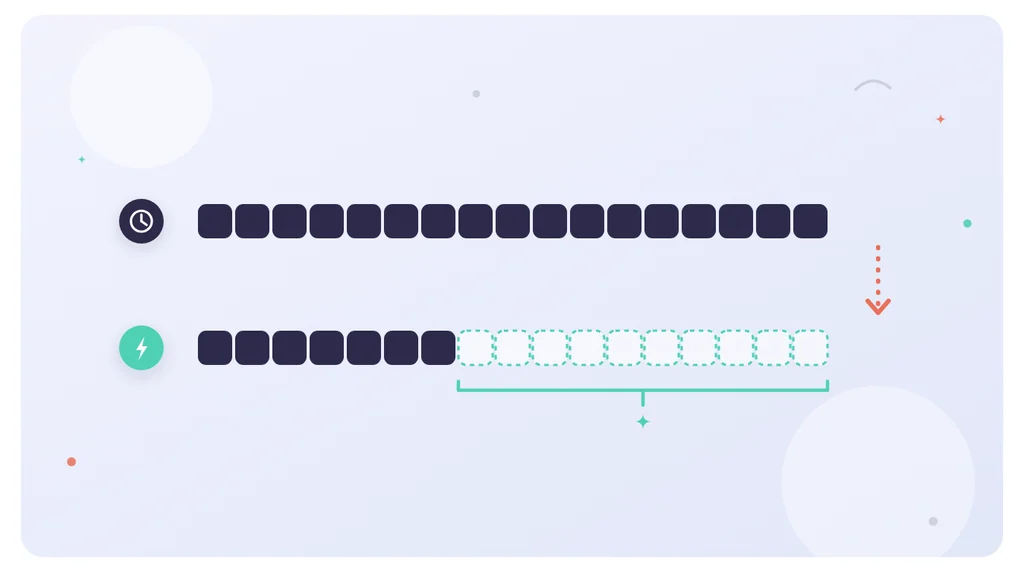
Seventeen hours a month. At a loaded cost of $25 an hour that is $425 of someone’s working time spent retyping things.
Automation will not remove all of it. Somebody still writes the messages, checks them, and fixes them when they stop working. Assume it removes 60%. That is 10.2 hours, or $255 a month, against a Starter plan at $21.60 a month.
The money matters less than what the hours get used for. Ten hours is enough to write one genuinely good piece of content, or call back twenty people who raised their hand. Those are things a machine cannot do for you, which is exactly why you want the machine doing the typing.
How does marketing automation make you faster to answer a lead?
Because the reply does not wait for a human to be awake, free, and looking at the right inbox.
A person fills in your form at 9pm on a Saturday. By hand, they hear from you Monday. By then they have filled in two more forms, and one of those companies replied in four minutes. The slow reply is not a small disadvantage, it is usually the whole decision, which is why speed to lead is the metric worth fixing before almost anything else.
What automation changes:
The first reply is instant. A confirmation that says what happens next, sent in seconds, with their name and what they asked about.
The second and third touches still happen. A lead follow up sequence keeps going on day two and day five, which is where most by hand follow up quietly stops.
A human comes in at the right moment. When someone replies or asks a real question, the automation steps aside and hands over. A clean chatbot human handoff is the difference between fast and annoying.
The benefit is not that a robot talks to your customers. It is that nobody falls through a gap because it was the weekend.
How does marketing automation recover sales you are already losing?
By messaging the people who nearly bought and then stopped. This is the clearest money benefit, because the demand already exists and you already paid to create it.
Most online carts never turn into orders. The Baymard Institute puts the average documented cart abandonment rate at 70.22%, calculated as an unweighted average of 50 studies published between 2006 and 2025, with individual studies ranging from 55% to 84%. Roughly seven in ten carts are left behind.
Work it through on a small shop.
| Figure | |
| Carts started per month | 1,000 |
| Abandoned at 70.22% | 702 |
| Average order value | $60 |
| Value sitting in abandoned carts | $42,120 |
| Recovered by a 3 message sequence at 5% | 35 orders |
| Recovered revenue per month | $2,100 |
| Cost of the Growth plan that runs it | $44 |
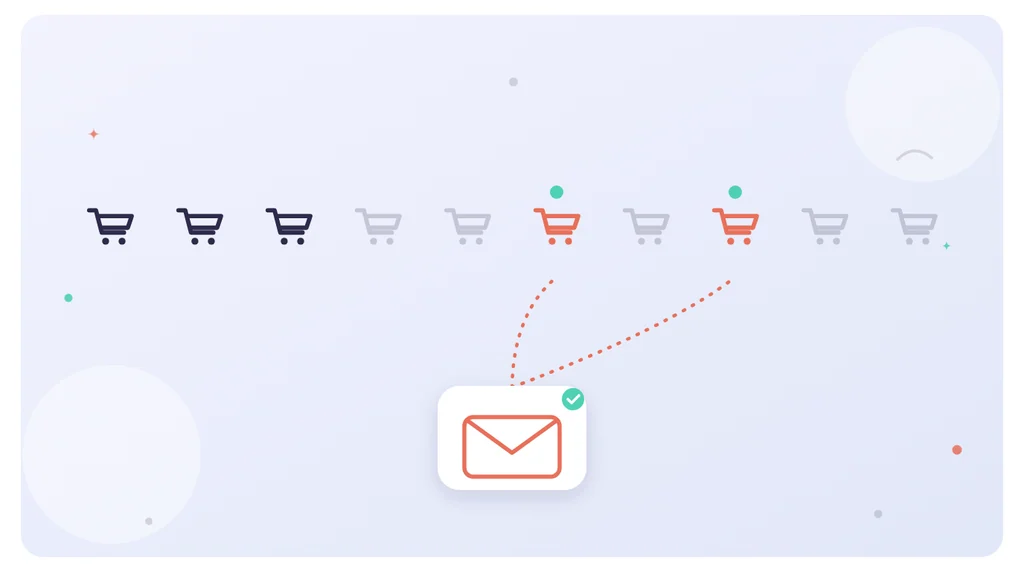
The 5% is my assumption, not a published figure, and yours will be different. But look at the size of the gap. Even at 1% recovery that is $420 a month from messages you write once.
The same logic works outside shops. A quote that was never followed up, a trial that went quiet, a booking that was never confirmed. All of them are demand you already paid for, sitting still. Automated email marketing is how you go back and ask.
How does marketing automation improve lead quality, not just lead count?
By sorting people before a human spends time on them.
More leads is not automatically good. Fifty enquiries where three are serious is worse than ten enquiries where six are, because your team burns the same hours either way. The benefit here is sorting, not volume.
Automation sorts in three ways:
It asks the qualifying questions. Budget, timeline, what they actually need. A form or a bot can ask these at 2am without it feeling like an interrogation, which is the practical half of lead qualification.
It scores behaviour, not just answers. Someone who opened three emails and looked at pricing twice is in a different position from someone who downloaded one guide. The software can see that pattern. A person reading an inbox cannot.
It groups people so the message fits. Splitting your list into a small number of real groups, which is all audience segmentation needs to be, means a first time visitor and a returning customer stop getting the same email.
The gain is your team’s attention. They spend their day on the people most likely to say yes, and the rest keep getting useful messages until they are ready. AI chatbots improve lead generation mostly through this sorting, not through catching more people.
How does marketing automation help you keep the customers you have?
By making sure someone hears from you after they pay, which is the part almost every business forgets.
Think about where effort usually goes. Enormous attention on winning the customer, then near silence once they buy. The next message they get is often an upsell, which reads badly after months of nothing.
Automation fixes this cheaply because the messages are the same for everyone and can be written once:
- An onboarding sequence that shows them how to actually use the thing
- A check in at day 30 that asks whether it is working
- A renewal reminder before the card gets declined, not after
- A win back message when someone goes quiet
None of that is clever. It is just reliable, and reliable is what customer retention automation is for. Keeping a customer is nearly always cheaper than finding a replacement, so this benefit compounds while the others stay flat.
Support is part of the same picture. The benefits of automated customer support show up as answers at midnight and fewer repeated questions reaching your team, and automated chatbots reduce operational costs in the same way, by handling the hundred questions that have one correct answer.
How does marketing automation lower your cost per lead?
Not by making your ads cheaper. It lowers the cost of a lead that turns into a conversation, which is the number that actually matters.
Here is the shift.
| Before automation | After | |
| Monthly ad spend | $1,000 | $1,000 |
| Leads generated | 80 | 80 |
| Cost per lead | $12.50 | $12.50 |
| Leads who reply to follow up | 16 (20%) | 28 (35%) |
| Cost per real conversation | $62.50 | $35.71 |
The spend did not move. The lead count did not move. What moved is how many of those 80 people ended up in a conversation, because the follow up actually happened to all of them instead of the ones somebody got around to.
This is why cost per lead on its own is a misleading number to optimise. The pillar guide works through how to reduce cost per lead with automation in more detail, including which metric to replace it with.
What can you finally measure once marketing is automated?
Which message did the work. By hand, you cannot know, because every send is slightly different and nobody logged what happened.
Once the same sequence runs for everybody, you get a clean comparison. Same message, same timing, hundreds of people. Now the numbers mean something:
- How many people open the second email versus the first
- Where in the sequence people stop replying
- Which subject line gets a response from returning customers
- How long it takes from first contact to a booked call
- How many conversations one piece of content is worth
This is a real benefit and it is badly undersold. Knowing that message three is the one that books calls tells you what to write more of. Guessing does not. The same thinking applies to any channel, which is why measuring the ROI of AI chatbots starts with deciding what one booked conversation is worth to you.
Joining the data to your customer records is what makes it usable. When you integrate automation with your CRM, the email history and the sales conversation live in the same place, and CRM marketing automation stops being two separate tools that disagree about who a person is.
What does it actually cost to get these benefits?
Less than most people expect in software, more than most people expect in setup time.
Markleyo’s live pricing, billed yearly:
| Plan | Per month | Per year |
| Starter | $21.60 | $259 |
| Growth | $44 | $529 |
| Premium | $109 | $1,299 |
You can see the current plans and what each includes on the pricing page.
The software is the small cost. These are the real ones:
Setup time. A first useful automation takes a few hours to think through and build. Writing the messages is most of that, and it is work you would need to do anyway.
Cleaning your data. If your contact list has duplicates, dead addresses and missing names, automation will send to all of them confidently. Tidying up comes first.
Someone owning it. An automation nobody checks keeps running after it stops being true. A monthly ten minute look at what is still sending is the whole maintenance job.
Connecting your tools. Your form, your calendar, your shop and your inbox need to talk to each other. Check the integrations you already use before you commit to anything.
How long does it take before the benefits show up?
Faster than a strategy, slower than a demo suggests. Different benefits arrive at different times.
| When | What you see |
| Day one | Every new signup gets an instant, correct reply |
| Week two | Follow up stops depending on who remembered |
| Month one | First clean numbers. Opens, replies, bookings, by message |
| Month two | A recovery or re engagement flow usually covers the tool’s cost |
| Month three | Enough data to know which message to rewrite |
| Month six | Segmentation worth doing, because you can see real groups |
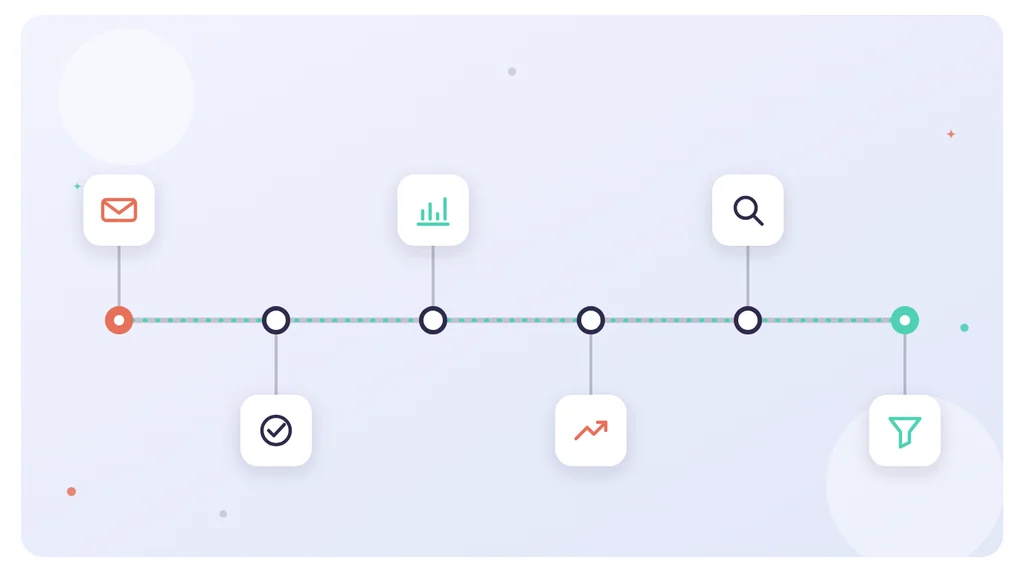
The pattern is worth noticing. Time savings are immediate. Money shows up around month two or three. Insight is last, because insight needs volume.
Anyone promising revenue in week one is selling you the demo, not the product.
Which benefits apply to a small business?
Most of them, and the time benefit matters more to you than to a big company, because the hours are coming out of your own week.
| Benefit | One or two people | A marketing team |
| Time back | Biggest single gain | Useful, frees specialists |
| Instant replies | Transformative, no night shift | Already partly covered |
| Recovered sales | Direct revenue, fast | Direct revenue, bigger numbers |
| Lead sorting | Protects your only calendar | Protects pipeline quality |
| Retention flows | High value, nobody else is doing it | Usually already running |
| Lead scoring | Skip at first, not enough volume | Worth building properly |
| Omnichannel sequences | Later. Get email right first | Worth the complexity |
| Full attribution | Not yet, too little data | Worth the investment |
If you are running a small business, the honest advice is to take the first four rows and ignore the rest for six months. AI marketing strategies for small business go into which ones pay back first, and small businesses benefit from brand automation covers the consistency side of it.
Sales side automation follows the same rule. Sales automation and automating your sales funnel are worth it once you have more enquiries than hours, and not really before.
What are the real downsides of marketing automation?
There are four, and knowing them is what separates a benefit from a mess.
It makes a bad message worse. If your follow up does not work when you send it by hand, automating it means sending something that does not work to more people, forever. Fix the message first. This is the single most common way the whole project fails, and the strategy guide puts it first for that reason.
Sending more email is not free. Mailbox providers watch how people react to you. Google’s sender guidelines require bulk senders to authenticate their mail properly and keep spam complaints very low, and failing that quietly moves your messages to spam. Volume without permission costs you the channel.
Consent is a legal requirement, not a setting. Under Article 7 of the GDPR you have to be able to demonstrate that a person consented. “They filled in a form once” is not a record. Keep the proof.
Automation with no exit rule is rude. The flow that keeps emailing someone who already bought, already replied, or already said no is the complaint real customers actually have. Every sequence needs a rule that stops it.
None of these are reasons to avoid automation. They are the reasons to build one flow carefully instead of six quickly.
FAQ
What is the biggest benefit of marketing automation?
Consistency. Every other benefit depends on it. The follow up happens on a busy week, during a holiday, and at 2am on a Sunday, at the same quality every time. Humans cannot do that, and almost all lost sales come from the times nobody got around to it.
Is marketing automation worth it for a small business?
Usually yes, and sooner than people think. If you spend more than about two hours a week sending the same messages by hand, a $21.60 a month plan pays for itself in time alone. Start with a welcome message and a three step follow up. Ignore everything else.
How much does marketing automation cost?
Markleyo starts at $21.60 a month billed yearly, which is $259 a year, with Growth at $44 a month and Premium at $109 a month. Across the market, small business tools run from roughly $20 to $100 a month. Enterprise platforms run into thousands and need a specialist to operate.
Does marketing automation increase sales?
It increases the number of sales you do not lose, which shows up the same way in your bank account. It does this by replying faster, following up every time, and going back to people who nearly bought. It does not create new demand. That still comes from your offer and your marketing.
How long does it take to set up?
A first useful automation takes a few hours, most of it spent writing the messages rather than building anything. A welcome email can be live the same day. A full connected setup across email, chat and your CRM is a few weeks of part time work.
Can marketing automation replace my marketing team?
No, and treating it that way is how it goes wrong. It replaces repeated typing. Someone still has to decide what to say, write it well, read the numbers, and talk to the people who reply. Automation gives those people their time back.
What is the difference between marketing automation and email marketing?
Email marketing is one channel. Marketing automation is the rules that decide what gets sent, to whom, and when, across every channel. Email is usually where you start because it is the easiest to measure, but the same triggers can drive chat, SMS and tasks for your sales team.
What should you automate first?
The thing that costs you money when it does not happen. For most businesses that is the first reply to a new enquiry, because it is the fastest to build and the easiest to measure. Get that working and watched for two weeks before you build anything else.
Where to go next
The benefits above are the outcome. The order you build in is what decides whether you get them, and that is a different question with a different answer: how to build a marketing automation strategy in seven steps.
If you would rather start with one working flow than a plan, automated email marketing is the shortest route to something live this week, and the blog has the rest of the cluster.